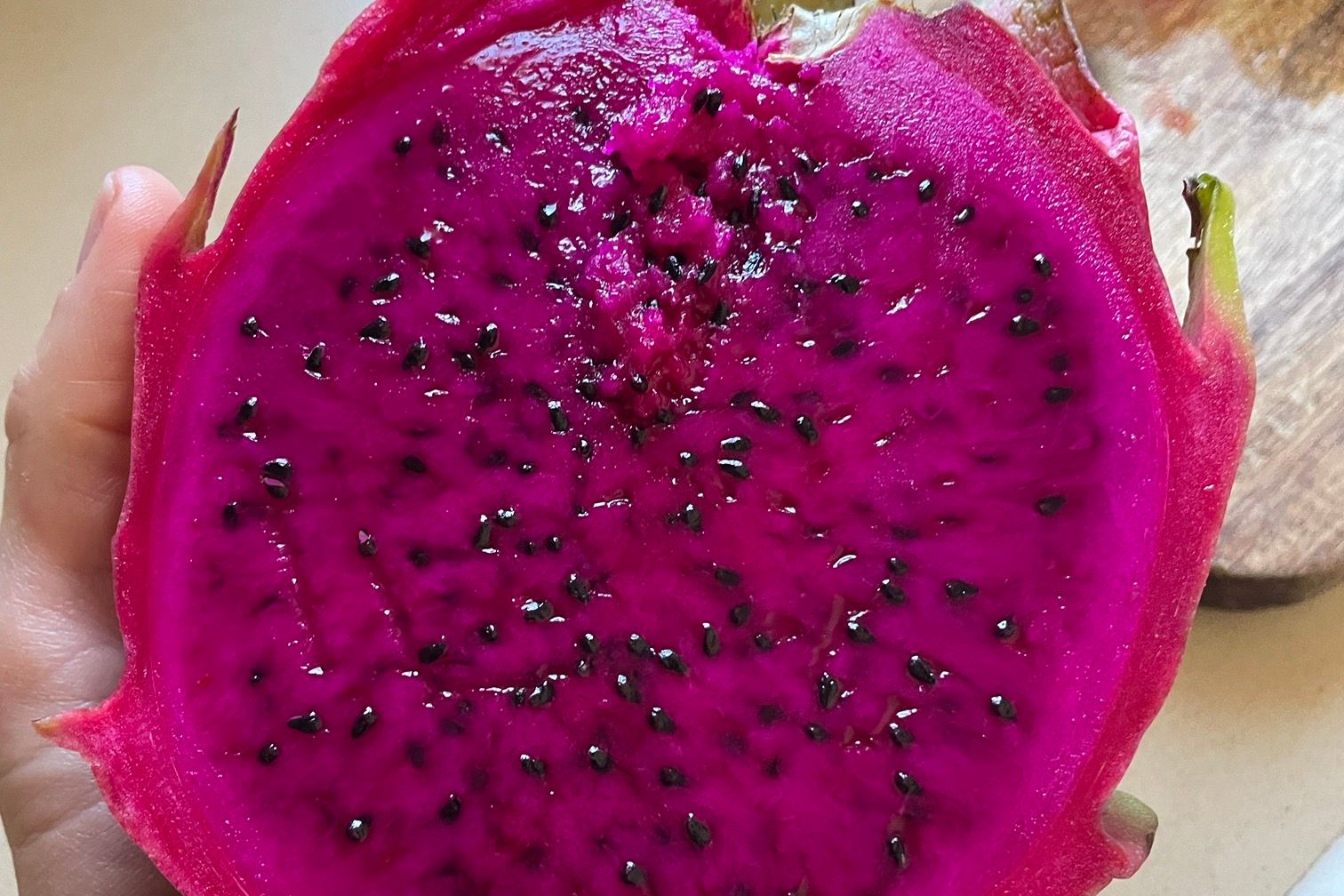
I grew up in Colombia surrounded by tropical fruit, so pitaya always feels a little like home to me. Of all the varieties, the purple one, with its deep magenta flesh, is my favorite to cook with. It's beautiful, it's good for you, and it has a surprisingly romantic story.
A flower that lives for one night
Pitaya grows on a climbing cactus native to Mexico and Central America. Its flowers are huge, white and smell a little like vanilla, and each one opens for only a single night. In the dark, moths and bats come to pollinate it. If all goes well, that flower becomes a fruit.
There's a twist, too: most pitaya plants can't pollinate themselves. They need a partner plant that flowers on the same night. I love that.
A desert success story, right here in Israel
You might think a tropical fruit needs a tropical climate, but pitaya is a cactus, which makes it a natural fit for Israel. Researchers at Ben-Gurion University have spent decades adapting it to the Negev. As a Colombian living in Israel, that makes me smile.
Why I love it in my kitchen
That intense purple color comes from natural pigments called betalains (the same family that colors beets). They're strong antioxidants, and researchers are studying them for anti-inflammatory and heart-health benefits.
Purple pitaya also gives you:
- Fiber, plus natural prebiotics that feed healthy gut bacteria
- Vitamin C, magnesium and iron
- Gentle natural sweetness, with very few calories
Most of the research so far is early, so I see pitaya as a nourishing fruit, not a cure. But for my clients with food sensitivities, it's a gift: naturally sweet, colorful and easy to work into all kinds of dishes.
How to enjoy it
- Choose it ripe: the skin should be evenly colored and give slightly when pressed, like a ripe avocado.
- Chill it briefly: pitaya doesn't love long fridge storage. Pop it in the fridge about two hours before serving.
- Keep it raw or cold: the purple color fades with heat. It shines in smoothie bowls, chia puddings, homemade fruit ice cream and no-bake desserts. A squeeze of lime keeps the color bright.
- Eat the seeds: the tiny black seeds are edible and add a lovely crunch.
One small heads-up: purple pitaya can turn your urine or stool pink. It's completely harmless!
— Jennyfer