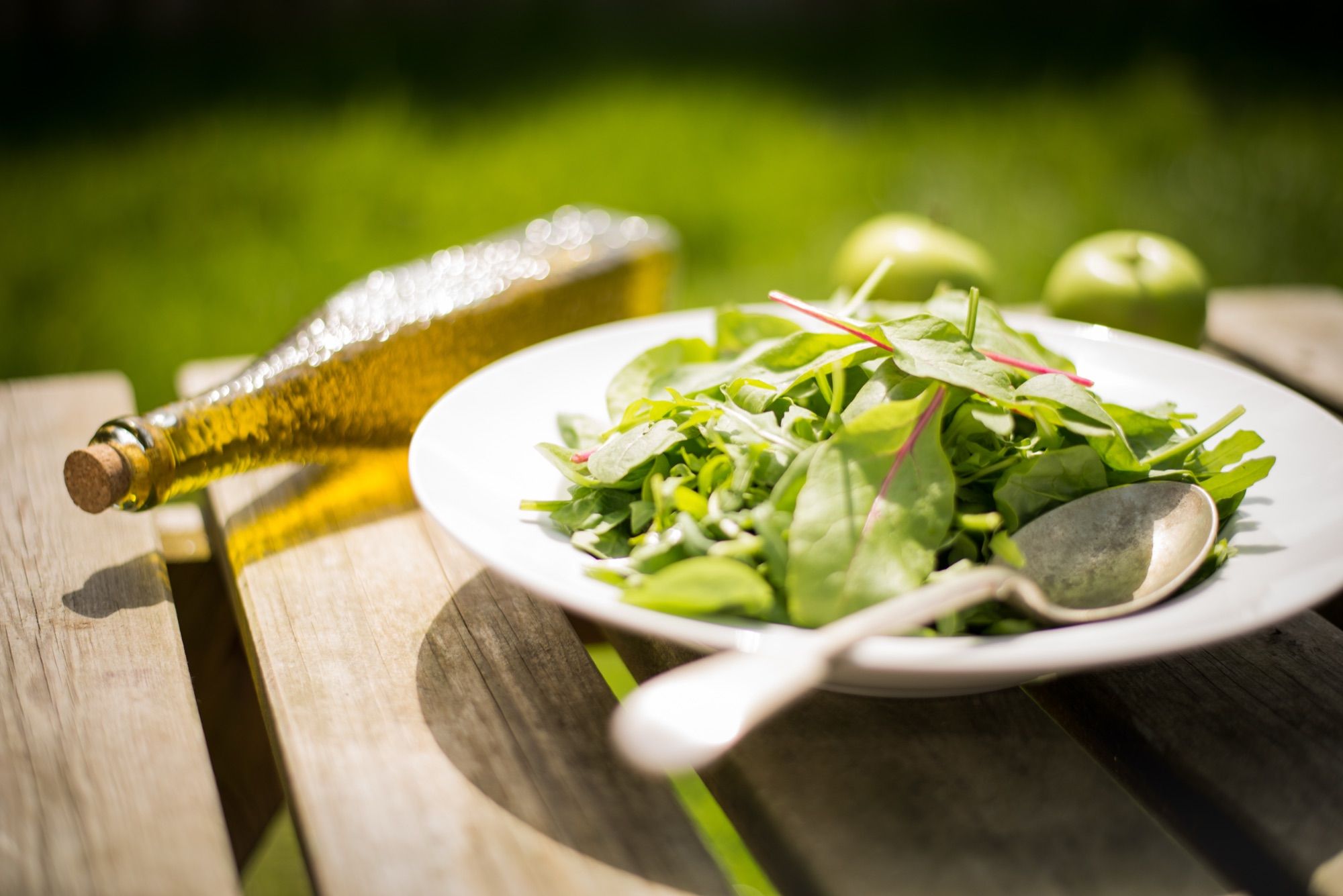
There's one way of eating that has been studied more than any other — in tens of thousands of people, over decades. It isn't named after a guru, and you can't buy it as a powder. It's called the Mediterranean diet, and luckily for us, it's made almost entirely of things that grow here anyway.
I love this story because it proves exactly what I believe: good food doesn't have to be fancy, expensive or exotic.
What's actually in it
Before we get to the findings, let's define it. It isn't a program or a meal plan — it's a pattern: mostly plant-based, with vegetables, fruit, whole grains, legumes, nuts and seeds. Olive oil is the main source of fat, fish appears fairly regularly, and red meat and processed food far less often.
Note the difference: it's not about adding olive oil to what you already eat, but about changing what fills most of your plate.
What the research shows
Two areas stand out in particular:
- Heart health. Population studies consistently link this way of eating, and olive oil in particular, to lower rates of heart disease and stroke. In its 2025 guidelines, the American Diabetes Association recommends considering a Mediterranean eating pattern for people at risk of heart disease and diabetes.
- Brain health and memory. Both observational and intervention studies find a link to better cognitive function and slower cognitive decline with age, including in vascular dementia and Alzheimer's.
It's not down to one magic ingredient but a combination: plenty of polyphenols, which fight oxidation and inflammation, along with improvements in blood pressure, blood fats and blood sugar.
And what I'd ask you not to take from it
I want to be straight with you here. Most of the research is observational — it shows a link, not necessarily a cause. People who eat this way also tend to move more and smoke less, and even the large studies looked at the whole pattern rather than a single ingredient.
So there are two popular takeaways that simply aren't what the studies measured: that a spoonful of olive oil a day "protects" your heart, and that you can add this pattern on top of a diet full of processed food and get the same results. It doesn't work that way.
What it looks like in your kitchen
The good news is that you live in exactly the right place. A few small changes — no rules, no sacrifices:
- Olive oil as your everyday fat — for cooking and for salads.
- Legumes two or three times a week. Chickpeas, lentils, beans — one pot is enough for several meals.
- Vegetables at every meal, not just as a side.
- Fish once or twice a week. A can of sardines counts too.
- Red meat less often, and in smaller portions.
- Nuts and seeds instead of processed snacks.
There's nothing expensive or complicated here. It's all stuff you'll find at any Israeli market.
The bottom line
What's impressive about this way of eating isn't that it's new — it's that it has been tested again and again and still holds up. And it happens to be exactly how people cooked here long before anyone gave it a name.
Eat better, not less. It's true here too.
This article is for general information only and is not nutritional or medical advice.