Every year, a few words turn up in every article about nutrition. This year there were three: fiber, gut health and ultra-processed. So let's look at what's behind them — and how much of it actually makes it onto your plate.
Fiber is the new protein
After a decade of protein being splashed across every label, this year it was fiber's turn in the spotlight. The usual recommendation is 25 to 35 grams a day — and let's be honest, most of us are nowhere near that.
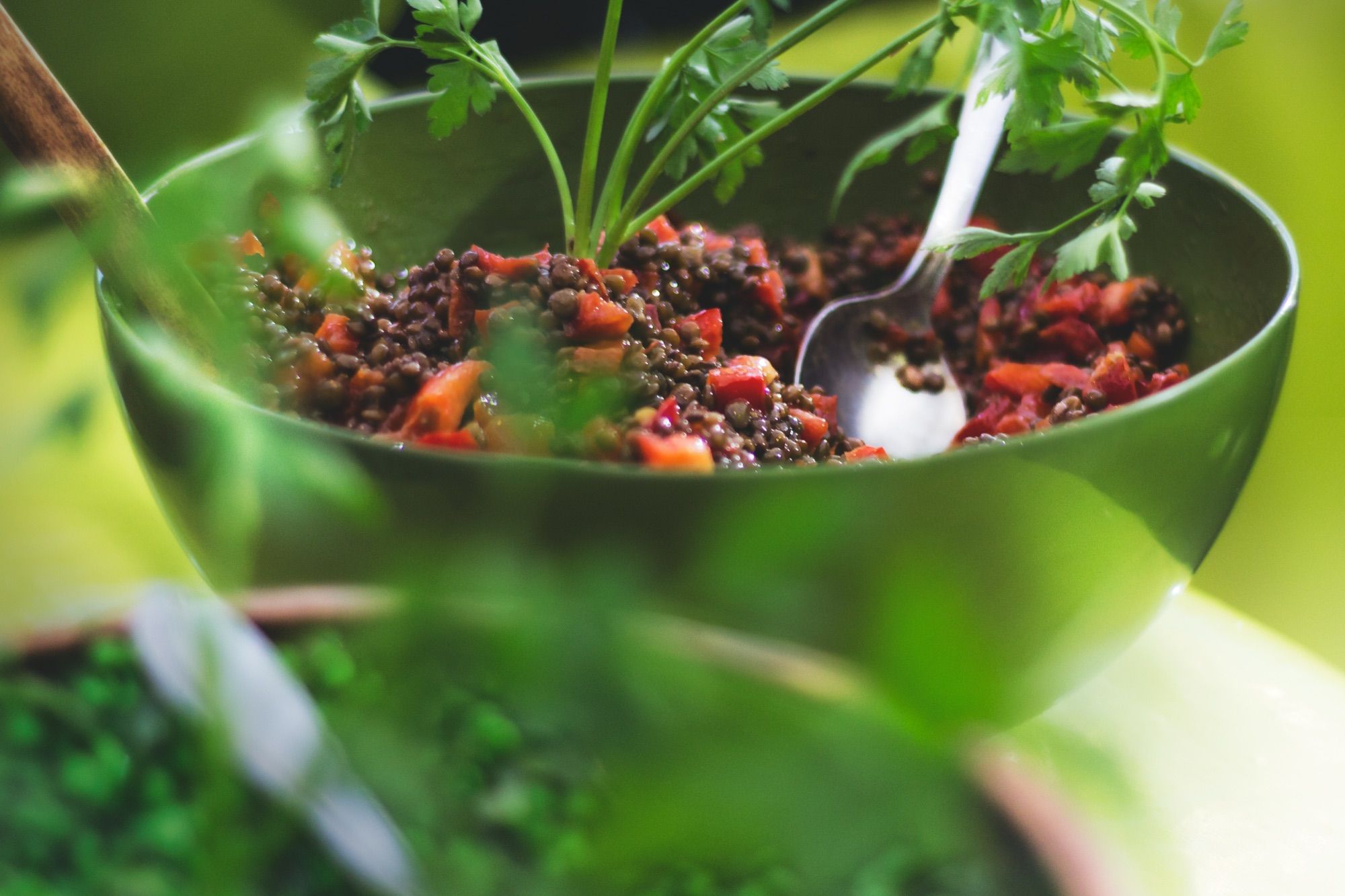
The important part that gets less attention: the research points to fiber from whole foods — vegetables, fruit, legumes, whole grains, nuts and seeds — not fiber supplements or fortified snacks. A scoop of powder in water isn't the same as a plate of lentils.
And in practice, it's much simpler than it sounds. Half a cup of legumes, a whole piece of fruit instead of juice, whole-wheat bread instead of white — and most of the gap closes almost by itself.
Gut health was everywhere
The fastest-growing area this year was the link between what we eat and the diversity of our gut bacteria. Two things keep coming up in the findings: fiber and fermented foods.
Fermented foods aren't a new trend here — they're simply back in the spotlight:
- Yogurt and kefir. The easiest to find — and, without added sugar, the most useful too.
- Sauerkraut and pickles — naturally fermented, not made with vinegar.
- Miso and tempeh, which add depth of flavor to soups and stews.
- Homemade labneh, which takes five minutes of work and a day in the fridge.
You don't need all of them, and you don't need them every day. I believe a small, regular serving does more good than a week-long burst of enthusiasm.
The word on everyone's lips: ultra-processed
If one word dominated professional conferences this year, it was "ultra-processed". The consistent finding isn't dramatic but cumulative: the bigger the share of ultra-processed food in someone's diet, the more calories, carbs and saturated fat they consume — and the less protein and fiber.
In other words, the problem isn't only what goes in, but what gets pushed out. Every processed serving takes the place of something else.
And I want to reassure you here: "processed" isn't a dirty word. Canned legumes, tahini, yogurt and sourdough bread have all been through some kind of processing, and they're all excellent. The difference is between food that has been processed and a product put together from industrial ingredients.
What this means for your kitchen
Put all three trends together and you get something very simple — no rules, no sacrifices:
- Put legumes on your plate most days of the week. They take care of both fiber and protein.
- Add one small serving of fermented food a day — a spoonful of labneh, a glass of kefir, a little sauerkraut.
- Choose whole fruit over juice, and whole grains over refined ones. It's a small difference at every meal, and it adds up.
- Read ingredient labels — not to scare yourself, but to see what your week is really made of.
None of this is new, and none of it is a diet. It's mostly a return to what a home kitchen does naturally — when you actually cook in it.
The bottom line
This year's research didn't discover a superfood or rule out a food group. It mostly confirmed something boring but true: variety, whole foods, and far more plants than most of us eat.
And that, as it happens, is exactly the kind of cooking that lasts — because it doesn't ask you to give anything up.
This article is for general information only and is not nutritional or medical advice.